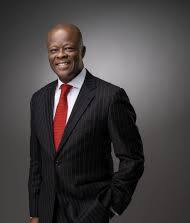
In a recent address to capital market stakeholders, Minister of Finance and Coordinating Minister of the Economy, Wale Edun, offered important reassurances about the government’s plans surrounding the proposed changes to the Capital Gains Tax (CGT) regime. In doing so, he sought to allay fears among brokers, investors, and market operators that the tax reform might undermine the momentum of the country’s equities market.
At an event hosted by the Nigerian Exchange (NGX) Group, where the Ministry of Finance Incorporated (MOFI) Real Estate Investment Fund (MREIF) Series 2 was listed, Edun publicly acknowledged the concerns that have emerged in response to the proposed CGT reforms. He insisted that while the government remains committed to reforming the tax system to enhance fairness and revenue mobilisation, it will do so with an open ear to market feedback.
He said “We have heard what you have said about capital gains tax. We will listen, analyse, and decide what is best for Nigeria and for your markets.”
He emphasised that the proposed CGT framework—which introduces a progressive rate structure in place of the former flat rate—will not be implemented in a vacuum but rather with active consultation and review to ensure the final policy supports investor confidence, vibrant markets, and economic growth.
The broader context cannot be ignored: Nigeria’s equities market has shown strong returns in recent months, but it is also facing several headwinds. Among these are investor jitters around the new CGT proposals, year-end portfolio adjustments, and geopolitical tensions affecting confidence. Against that backdrop, Edun’s message was meant to send a clear signal: the government wishes to both raise revenue and safeguard market growth.
- Abducted Oyo Pupils, Teachers Rescued After 56 Days in Captivity
- First Batch of Evacuated Nigerians Arrive Home from South Africa Amid Xenophobic Tensions
- Food and Beverages West Africa Exhibition Set for Landmark Event Centre This June
- Interview: Naira Stability May be Tested By Global Oil Crisis.
- Customs to End Routine Physical Cargo Inspection By December.
A reform of the CGT is significant for several reasons. First, it reflects the government’s effort to modernise Nigeria’s tax architecture—aligning more closely with global norms of progressive taxation and narrowing loopholes that have long eroded public revenue. Second, the capital market remains a crucial driver of national growth, serving as a channel for mobilising domestic and international capital, supporting enterprise, enabling wealth creation, and helping deliver on major national priorities such as housing and infrastructure. Third, if such a reform is perceived as abrupt or punitive, it could trigger capital flight, drain market liquidity, or cause retail investors to retreat—all of which would undermine broader economic reforms.
The government has promised to engage brokers, investors, and market operators before finalising any CGT adjustments, ensuring that policies are shaped by input from those directly affected.
Fairness: The reformed framework is expected to include deductions for investment-related costs, recognition of capital losses, and exemptions for certain categories of investors, particularly smaller players.
Market confidence: By assuring the investment community that tax measures will not stifle market growth, the government hopes to maintain a favourable environment for capital formation and continued inflows.
Despite these reassurances, market participants remain cautious. Some view the proposed CGT rate increase as ill-timed, given the fragile recovery of the equities market and the urgent need to attract foreign capital. Others are seeking clarity on implementation timelines, possible exemptions for small investors, the treatment of existing investments, and the practical mechanisms for tax administration. Many agree that the ability of the government to introduce reforms without disrupting market stability will be key to their success.
Minister Edun’s intervention represents a careful attempt to strike a balance: acknowledging the legitimate revenue needs of the state while also recognising the importance of investor confidence and market vitality. Whether this balance holds will depend largely on how swiftly and transparently the government proceeds with consultations, how clearly it communicates the final policy, and how effectively it manages its rollout.If handled well, the reform could strengthen both Nigeria’s fiscal base and its investment climate—offering a more equitable and efficient system that rewards productive investment while generating revenue for national development.
In the end, Edun’s reassurance underscores a broader principle of economic reform: fiscal policy must serve growth, not hinder it. The capital market’s health remains a barometer of economic confidence, and a well-balanced capital gains tax policy could become a model for aligning national revenue objectives with sustainable investment growth.
-
Abducted Oyo Pupils, Teachers Rescued After 56 Days in Captivity
Rescued Oyo Pupils and Teachers The abducted Oyo pupils and teachers have been rescued after 56 days in captivity following a coordinated security operation involving the military and other security agencies. By Uche Ikebudu The pupils and teachers abducted from three schools in Oriire Local Government Area of Oyo State have regained their freedom after…
-
First Batch of Evacuated Nigerians Arrive Home from South Africa Amid Xenophobic Tensions
Hundreds of Nigerians return to Lagos as the Federal Government begins phased evacuation efforts following attacks on foreign nationals in South Africa. By Uche Ikebudu. Friday June 12, 2026 The evacuation of Nigerian citizens from South Africa gathered momentum on Wednesday as the first batch of returnees arrived in Nigeria following weeks of tension and…
-
Food and Beverages West Africa Exhibition Set for Landmark Event Centre This June
Leading industry players, manufacturers, and investors to converge in Lagos for a three-day showcase of innovation, networking, and growth opportunities in West Africa’s food and beverage sector. By Uche Ikebudu LAGOS, NIGERIA — The highly anticipated Food and Beverages West Africa (FAB West Africa) Exhibition is set to take place this June at the Landmark…
-
Interview: Naira Stability May be Tested By Global Oil Crisis.
Mr Bolaji Soneye By Uche Vera In this Interview, Mr Bolaji Soneye, the Managing Director of Flotrade, a Lagos Based Foreign Exchange Firm talks on the unification of the Naira and how it has emerged as one of the biggest drivers of the Naira performance. He also spoke on the war in Iran and how…
-
Customs to End Routine Physical Cargo Inspection By December.
By Uche Ikebudu Nigeria’s customs authorities have announced plans to phase out routine physical inspections of cargo at ports across the country by December, a move aimed at modernising clearance processes and reducing delays in the movement of goods. The decision was disclosed by the Comptroller-General of the Nigeria Customs Service, Bashir Adewale Adeniyi, during…
-
Mallam Kasimu Garba Kurfi, The MD of APT Securities and Funds Limited Talks on the GDP Growth, Economic Reforms, MPR Among Other Issues
Mallam Kasimu Garba Kurfi, MD, APT Securities and Funds Limited. By Uche Ikebudu Q: The GDP growth increased by 4.07 percent in Q4 2025. And Q2 2025, the GDP grew by 4.23 percent. This is the highest GDP growth in 10 years.What’s your take on the GDP growth trend and the economic reform policies of…