The launch of the $400 million rare earth processing plant marks a major turning point for Nasarawa’s economic future. It positions the state as a rising force in Nigeria’s solid minerals sector and the global clean-energy value chain. This milestone also reflects growing investor confidence and Governor Sule’s commitment to industrial development.
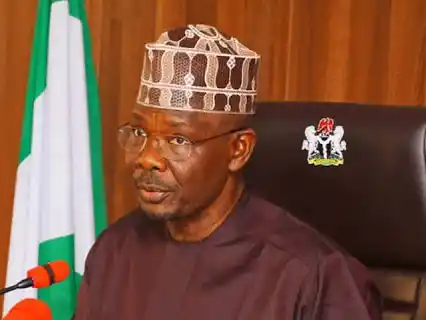
Governor Sule of Nasarawa State
Ɓy Uche Vera
Nasarawa State has taken a decisive step toward becoming a major player in Nigeria’s rapidly expanding solid minerals sector as Governor Abdullahi Sule officially launched a $400 million rare earth processing plant—a milestone project positioned to boost economic diversification, industrial growth, and job creation across the state.
The newly commissioned plant, located in the mineral-rich community of Wuji in Nasarawa’s North Central region, is designed to process a broad range of rare earth elements (REEs), which are essential in the global production of clean energy technologies, electric vehicles, semiconductors, advanced magnets, military equipment, and aerospace components. With the global demand for REEs projected to rise sharply over the next decade, the development positions Nasarawa as a potential strategic hub in both regional and international supply chains.
Governor Sule, speaking at the launch ceremony, described the project as “a transformational investment that aligns with Nigeria’s vision for economic diversification and technological advancement.” He emphasized that rare earth minerals, once overlooked, are now among the world’s most sought-after resources, and Nasarawa’s abundant deposits offer the state an opportunity to lead.
- Abducted Oyo Pupils, Teachers Rescued After 56 Days in Captivity
- First Batch of Evacuated Nigerians Arrive Home from South Africa Amid Xenophobic Tensions
- Food and Beverages West Africa Exhibition Set for Landmark Event Centre This June
- Interview: Naira Stability May be Tested By Global Oil Crisis.
- Customs to End Routine Physical Cargo Inspection By December.
The governor highlighted the plant’s expected impact on the state economy: the creation of thousands of direct and indirect jobs; increased internally generated revenue (IGR); and the development of support industries such as logistics, engineering, construction, environmental services, and vocational training. He also noted that the project will strengthen investor confidence in Nigeria’s mining sector, which has seen renewed interest in recent years due to favorable policy reforms.
The plant is being developed in partnership with a consortium of local and international investors, including mineral engineering specialists, processing technology firms, and exploration companies with deep experience in rare earth extraction. It incorporates modern processing equipment designed to meet global sustainability standards, including waste management systems and environmentally responsible refining methods. According to project engineers, the facility will process ore sourced from mining sites across Nasarawa, improving value addition before export and reducing Nigeria’s reliance on the export of raw mineral commodities.
In his remarks, the project’s lead investor expressed optimism about the plant’s long-term prospects, stressing that African countries stand to benefit significantly from participating in the global energy transition. “Rare earth elements are the backbone of the future economy—renewable energy, digital connectivity, advanced manufacturing. Nigeria must not be left behind,” he said.
Local community leaders also welcomed the initiative, noting its potential to spur infrastructure development, including improved roads, electricity supply, and water systems. Many residents expressed hope that the government and investors will maintain strong community engagement to ensure shared prosperity and environmental protection.
Governor Sule affirmed that the state will continue to enforce strong regulatory oversight to ensure responsible mining and community safety. He underscored his administration’s commitment to transparency, sustainability, and capacity building, calling the rare earth processing plant “a symbol of Nasarawa’s readiness to compete on the global stage.”
With its launch, Nasarawa State is poised to become a critical node in Nigeria’s growing solid minerals value chain, bridging natural resource wealth with industrial innovation and future-focused economic development.
-
Abducted Oyo Pupils, Teachers Rescued After 56 Days in Captivity
Rescued Oyo Pupils and Teachers The abducted Oyo pupils and teachers have been rescued after 56 days in captivity following a coordinated security operation involving the military and other security agencies. By Uche Ikebudu The pupils and teachers abducted from three schools in Oriire Local Government Area of Oyo State have regained their freedom after…
-
First Batch of Evacuated Nigerians Arrive Home from South Africa Amid Xenophobic Tensions
Hundreds of Nigerians return to Lagos as the Federal Government begins phased evacuation efforts following attacks on foreign nationals in South Africa. By Uche Ikebudu. Friday June 12, 2026 The evacuation of Nigerian citizens from South Africa gathered momentum on Wednesday as the first batch of returnees arrived in Nigeria following weeks of tension and…
-
Food and Beverages West Africa Exhibition Set for Landmark Event Centre This June
Leading industry players, manufacturers, and investors to converge in Lagos for a three-day showcase of innovation, networking, and growth opportunities in West Africa’s food and beverage sector. By Uche Ikebudu LAGOS, NIGERIA — The highly anticipated Food and Beverages West Africa (FAB West Africa) Exhibition is set to take place this June at the Landmark…
-
Interview: Naira Stability May be Tested By Global Oil Crisis.
Mr Bolaji Soneye By Uche Vera In this Interview, Mr Bolaji Soneye, the Managing Director of Flotrade, a Lagos Based Foreign Exchange Firm talks on the unification of the Naira and how it has emerged as one of the biggest drivers of the Naira performance. He also spoke on the war in Iran and how…
-
Customs to End Routine Physical Cargo Inspection By December.
By Uche Ikebudu Nigeria’s customs authorities have announced plans to phase out routine physical inspections of cargo at ports across the country by December, a move aimed at modernising clearance processes and reducing delays in the movement of goods. The decision was disclosed by the Comptroller-General of the Nigeria Customs Service, Bashir Adewale Adeniyi, during…
-
Mallam Kasimu Garba Kurfi, The MD of APT Securities and Funds Limited Talks on the GDP Growth, Economic Reforms, MPR Among Other Issues
Mallam Kasimu Garba Kurfi, MD, APT Securities and Funds Limited. By Uche Ikebudu Q: The GDP growth increased by 4.07 percent in Q4 2025. And Q2 2025, the GDP grew by 4.23 percent. This is the highest GDP growth in 10 years.What’s your take on the GDP growth trend and the economic reform policies of…