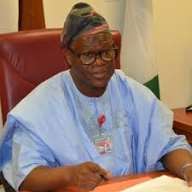
Ajibola Bashir
By Olukemi Odoh
In a surprising but strategic move, Senator Ajibola Basiru, the National Secretary of the All Progressives Congress (APC), has formally withdrawn from the party’s contest for the 2026 governorship of Osun State. His announcement on November 22, 2025, marks a turning point in what had been a crowded field of aspirants vying for APC’s ticket.
Basiru made the declaration in Osogbo during the commissioning of the Alubarika Movement House, the secretariat of his political movement. He told supporters and party faithful that his decision followed wide consultations with stakeholders, particularly with President Bola Ahmed Tinubu. He emphasized that the heavy burden of his current national responsibilities required his full attention. “Considering the enormous responsibilities of my current office as National Secretary and after due consultations, it has become necessary that I shall not be contesting the 2026 Osun State Governorship election,” he said.
The national scribe painted his withdrawal not as a retreat from his political ambitions, but as a realignment of priorities. He insisted this is not a step back from his vision for progressive politics, but rather a renewed commitment to the APC and to nurturing the next generation of leaders in Osun State.
Basiru’s exit comes amid a busy race for the APC ticket, with about 13 aspirants still in contention. Among them are notable figures such as Bola Oyebamiji, the former Managing Director of the National Inland Waterways Authority; Senator Babajide Omoworare; ex-Deputy Governor Iyiola Omisore; and Dotun Babayemi, son of the late Olufi of Gbongan.
- Abducted Oyo Pupils, Teachers Rescued After 56 Days in Captivity
- First Batch of Evacuated Nigerians Arrive Home from South Africa Amid Xenophobic Tensions
- Food and Beverages West Africa Exhibition Set for Landmark Event Centre This June
- Interview: Naira Stability May be Tested By Global Oil Crisis.
- Customs to End Routine Physical Cargo Inspection By December.
One key reason Basiru cited for his withdrawal was his belief that his institutional role could be more impactful in strengthening APC’s national structure and preparing the party for the 2027 general elections. He argued that the demands of his office required unwavering focus and that he preferred to devote himself fully to that mission.
Moreover, Basiru pledged continued support to President Tinubu’s agenda, both through his Alubarika Movement and via the party’s machinery. He committed his movement to work aggressively toward Tinubu’s re-election in 2027 while also building a platform to empower grassroots political actors in Osun.
As part of that commitment, Basiru announced a personal donation of ₦50 million as a take-off grant for the Alubarika Movement’s planned empowerment initiatives. He emphasized that the movement’s new headquarters—the Alubarika House—will serve as a hub not just for political mobilization but also for social development and grassroots engagement.
Reaction within the APC has so far been cautiously optimistic. Some party elders interpret his move as a selfless sacrifice that underscores the seriousness of the primary contest and the strategic importance of party unity. Former Speaker of the Osun State House of Assembly, Timothy Owoeye, expressed confidence that the party will come out of the primary in a united fashion, regardless of its outcome, and that Basiru’s withdrawal could ease tensions among aspirants.
Political observers see multiple layers to Basiru’s decision. On one level, it could be a tactical retreat: by stepping away, he avoids a potentially bruising battle and preserves his national standing. On another level, it signals a belief that his influence can do more good behind the scenes, particularly in strengthening party infrastructure rather than seeking executive power at the state level.
Basiru’s exit also reshuffles the power dynamics in the Osun APC primary, elevating other aspirants who may now sense a clearer path to the nomination. With a major contender out, the race could intensify around big names like Oyebamiji, Omoworare, Omisore, and Babayemi, all jockeying to define the APC’s future leadership in Osun.
At the same time, the broader political context in Osun is far from settled. The APC has faced internal tensions, notably from former Governor Rauf Aregbesola’s faction, which recently left the party amid claims of sidelining. The party must now manage both its primary contest and the lingering fallout from those divisions.
In stepping aside, Basiru frames his decision as consistent with his long-term vision: to deepen the APC’s organizational capacity, support emerging leaders, and help secure its political future. Whether this move ultimately strengthens his influence or simply preserves his relevance will depend on how the primary unfolds, and whether the APC can capitalize on his self-imposed exit to rally around a winning candidate.
-
Abducted Oyo Pupils, Teachers Rescued After 56 Days in Captivity
Rescued Oyo Pupils and Teachers The abducted Oyo pupils and teachers have been rescued after 56 days in captivity following a coordinated security operation involving the military and other security agencies. By Uche Ikebudu The pupils and teachers abducted from three schools in Oriire Local Government Area of Oyo State have regained their freedom after…
-
First Batch of Evacuated Nigerians Arrive Home from South Africa Amid Xenophobic Tensions
Hundreds of Nigerians return to Lagos as the Federal Government begins phased evacuation efforts following attacks on foreign nationals in South Africa. By Uche Ikebudu. Friday June 12, 2026 The evacuation of Nigerian citizens from South Africa gathered momentum on Wednesday as the first batch of returnees arrived in Nigeria following weeks of tension and…
-
Food and Beverages West Africa Exhibition Set for Landmark Event Centre This June
Leading industry players, manufacturers, and investors to converge in Lagos for a three-day showcase of innovation, networking, and growth opportunities in West Africa’s food and beverage sector. By Uche Ikebudu LAGOS, NIGERIA — The highly anticipated Food and Beverages West Africa (FAB West Africa) Exhibition is set to take place this June at the Landmark…
-
Interview: Naira Stability May be Tested By Global Oil Crisis.
Mr Bolaji Soneye By Uche Vera In this Interview, Mr Bolaji Soneye, the Managing Director of Flotrade, a Lagos Based Foreign Exchange Firm talks on the unification of the Naira and how it has emerged as one of the biggest drivers of the Naira performance. He also spoke on the war in Iran and how…
-
Customs to End Routine Physical Cargo Inspection By December.
By Uche Ikebudu Nigeria’s customs authorities have announced plans to phase out routine physical inspections of cargo at ports across the country by December, a move aimed at modernising clearance processes and reducing delays in the movement of goods. The decision was disclosed by the Comptroller-General of the Nigeria Customs Service, Bashir Adewale Adeniyi, during…
-
Mallam Kasimu Garba Kurfi, The MD of APT Securities and Funds Limited Talks on the GDP Growth, Economic Reforms, MPR Among Other Issues
Mallam Kasimu Garba Kurfi, MD, APT Securities and Funds Limited. By Uche Ikebudu Q: The GDP growth increased by 4.07 percent in Q4 2025. And Q2 2025, the GDP grew by 4.23 percent. This is the highest GDP growth in 10 years.What’s your take on the GDP growth trend and the economic reform policies of…