Debate intensifies over sugar content and global standards in infant nutrition.
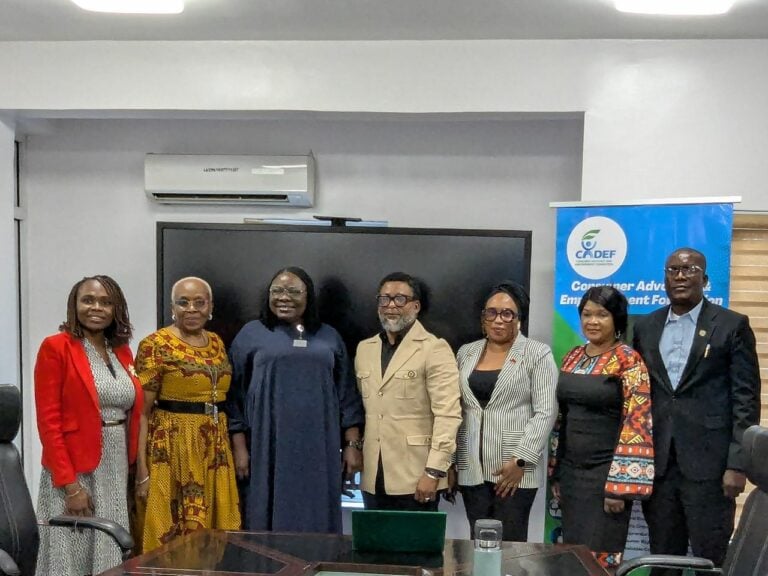
Public eye and CADEF advocates during a press conference in Lagos recently.
By Olukemi Odoh
A growing storm is brewing between global food giant Nestlé and a coalition of health-focused non-governmental organisations (NGOs), which accuse the company of lowering nutrition standards in baby food sold in Africa. At the heart of the dispute is an investigation by a Swiss watchdog, supported by African civil society groups, which claims that Nestlé’s Cerelac infant cereal sold in some low-income markets contains significantly more added sugar than variants sold in wealthier countries.
According to the report, more than 90 percent of nearly 100 Cerelac samples purchased across multiple African nations contained added sugars. On average, each serving reportedly had about six grams of added sugar — roughly equivalent to one-and-a-half sugar cubes. These findings have reignited concerns that children in developing countries are being offered products that may undermine their long-term health.
Critics argue that Nestlé is employing a “double standard,” providing sugar-free or much lower-sugar versions of cereal in European markets, while maintaining sweeter formulations in parts of Africa. The Swiss NGO and 19 African civil society organisations, including groups in Nigeria, have sent a letter to Nestlé’s CEO demanding changes. They call for the removal of refined sugars in all baby food products sold in Africa, clearer labeling of sugar content, and a commitment to globally uniform nutrition standards.
- Abducted Oyo Pupils, Teachers Rescued After 56 Days in Captivity
- First Batch of Evacuated Nigerians Arrive Home from South Africa Amid Xenophobic Tensions
- Food and Beverages West Africa Exhibition Set for Landmark Event Centre This June
- Interview: Naira Stability May be Tested By Global Oil Crisis.
- Customs to End Routine Physical Cargo Inspection By December.
Nestlé has strongly rejected the claims. The company insists that its products comply with both local regulations and international food-safety standards. Nestlé also disputes that naturally occurring sugars — from milk, cereal grains, or fruit — were wrongly classified as “refined sugar” in the NGO’s analysis. According to the company, the addition of sugar helps make cereals more palatable and thus more likely to be consumed in regions where undernutrition remains a serious concern.
The company says it is already rolling out sugar-free or no-added-sugar versions of its infant cereals globally, including in African markets. It claims that these variants are available in nearly all its markets and aims to reach full coverage soon.
Public health voices have welcomed the campaign. The National Action Sugar Reduction (NASR) Coalition in Nigeria, for example, has called for stronger regulation and greater transparency in the labeling of infant food. The coalition stresses that early-life exposure to high sugar levels could set unhealthy taste preferences and contribute to chronic diseases later in life.
Meanwhile, the Nigerian food regulatory body, NAFDAC, has weighed in, asserting that products on the market comply with national nutritional standards. According to the agency, the suspected sugar-laden formulas are not registered for sale in Nigeria.
The clash between Nestlé and the NGOs underscores a broader debate around global equity in food quality, corporate responsibility, and how best to protect infants’ health in regions grappling with both undernutrition and growing risks of diet-related diseases. As calls for reform intensify, the question remains: should all babies, regardless of geography, be fed to the same standard?
-
Abducted Oyo Pupils, Teachers Rescued After 56 Days in Captivity
Rescued Oyo Pupils and Teachers The abducted Oyo pupils and teachers have been rescued after 56 days in captivity following a coordinated security operation involving the military and other security agencies. By Uche Ikebudu The pupils and teachers abducted from three schools in Oriire Local Government Area of Oyo State have regained their freedom after…
-
First Batch of Evacuated Nigerians Arrive Home from South Africa Amid Xenophobic Tensions
Hundreds of Nigerians return to Lagos as the Federal Government begins phased evacuation efforts following attacks on foreign nationals in South Africa. By Uche Ikebudu. Friday June 12, 2026 The evacuation of Nigerian citizens from South Africa gathered momentum on Wednesday as the first batch of returnees arrived in Nigeria following weeks of tension and…
-
Food and Beverages West Africa Exhibition Set for Landmark Event Centre This June
Leading industry players, manufacturers, and investors to converge in Lagos for a three-day showcase of innovation, networking, and growth opportunities in West Africa’s food and beverage sector. By Uche Ikebudu LAGOS, NIGERIA — The highly anticipated Food and Beverages West Africa (FAB West Africa) Exhibition is set to take place this June at the Landmark…
-
Interview: Naira Stability May be Tested By Global Oil Crisis.
Mr Bolaji Soneye By Uche Vera In this Interview, Mr Bolaji Soneye, the Managing Director of Flotrade, a Lagos Based Foreign Exchange Firm talks on the unification of the Naira and how it has emerged as one of the biggest drivers of the Naira performance. He also spoke on the war in Iran and how…
-
Customs to End Routine Physical Cargo Inspection By December.
By Uche Ikebudu Nigeria’s customs authorities have announced plans to phase out routine physical inspections of cargo at ports across the country by December, a move aimed at modernising clearance processes and reducing delays in the movement of goods. The decision was disclosed by the Comptroller-General of the Nigeria Customs Service, Bashir Adewale Adeniyi, during…
-
Mallam Kasimu Garba Kurfi, The MD of APT Securities and Funds Limited Talks on the GDP Growth, Economic Reforms, MPR Among Other Issues
Mallam Kasimu Garba Kurfi, MD, APT Securities and Funds Limited. By Uche Ikebudu Q: The GDP growth increased by 4.07 percent in Q4 2025. And Q2 2025, the GDP grew by 4.23 percent. This is the highest GDP growth in 10 years.What’s your take on the GDP growth trend and the economic reform policies of…