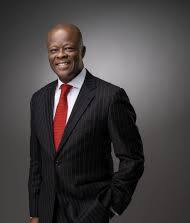
Wale Edun, Finance Minister.
A major revenue gap has scutlled FG’s revenue projections this.
Ɓy Olukemi Odoh
The Federal Government has recorded a significant revenue shortfall in the 2025 fiscal year, with actual receipts falling far below budget projections, the Minister of Finance and Coordinating Minister of the Economy, Wale Edun, has disclosed.
Speaking before the House of Representatives Committees on Finance and National Planning during an interactive session on the 2026–2028 Medium Term Expenditure Framework and Fiscal Strategy Paper, Edun said the government anticipated total revenue of N40.8 trillion for the year, but current fiscal performance shows collected revenues are likely to end at approximately N10.7 trillion.
The N40.8 trillion target was set to support the N54.9 trillion “budget of restoration,” which is designed to stabilise Nigeria’s economy, bolster security, and lay the foundation for long-term prosperity. However, with the significant gap between projected and actual figures, the government’s capacity to fully fund critical components of the 2025 budget has been constrained.
According to Edun, the sharp shortfall in revenue is largely attributable to weak performance in the oil and gas sector. Specifically, earnings from Petroleum Profit Tax and Company Income Tax from oil and gas companies underperformed, and other revenue subheads also failed to meet expectations.
“Weak oil and gas earnings and underperformance across several revenue streams have significantly affected total federal revenues,” Edun told lawmakers during the committee session.
- Food and Beverages West Africa Exhibition Set for Landmark Event Centre This June
- Interview: Naira Stability May be Tested By Global Oil Crisis.
- Customs to End Routine Physical Cargo Inspection By December.
- Agiville Industries Limited: Quality Assurance, Innovation and Customer Satisfaction are the Pillars of the Agiville Brand
- Mallam Kasimu Garba Kurfi, The MD of APT Securities and Funds Limited Talks on the GDP Growth, Economic Reforms, MPR Among Other Issues
The disclosure contrasts with remarks made earlier in the year by President Bola Tinubu, who had stated in September that the government had met its revenue target for the year, claiming that Nigeria had achieved its revenue goals by August without borrowing excessively. Edun’s remarks paint a different picture, revealing that revenue shortfalls have impeded full budget implementation.
In addition to the shortfall in revenue, Edun explained the Federal Government raised approximately N14.1 trillion through borrowing to help fund the 2025 budget. Combined with internally generated revenues, these inflows nevertheless fell far short of the total needed to cover the full budgeted expenditure
Despite the fiscal gap, Edun told lawmakers that the government has continued to meet critical obligations through what he described as “prudent treasury management.” These obligations include payment of salaries, statutory transfers, and both domestic and foreign debt service obligations, which the minister said have been fulfilled as and when due.
Providing further insight into expenditure performance, Edun noted that capital releases to federal ministries, departments, and agencies have been lower than planned. Capital releases in 2024 reached N5.2 trillion out of a budgeted N7.1 trillion, representing a 73 per cent performance rate, while total capital expenditure stood at N11.1 trillion out of N13.7 trillion, or about 84 per cent execution.
Edun cautioned that future expenditure planning should be anchored on realistic revenue assumptions rather than ambitious projections that have historically failed to materialise. He stressed the need for flexibility in budget planning, given persistent challenges in revenue performance.
-
Food and Beverages West Africa Exhibition Set for Landmark Event Centre This June
Leading industry players, manufacturers, and investors to converge in Lagos for a three-day showcase of innovation, networking, and growth opportunities in West Africa’s food and beverage sector. By Uche Ikebudu LAGOS, NIGERIA — The highly anticipated Food and Beverages West Africa (FAB West Africa) Exhibition is set to take place this June at the Landmark…
-
Interview: Naira Stability May be Tested By Global Oil Crisis.
Mr Bolaji Soneye By Uche Vera In this Interview, Mr Bolaji Soneye, the Managing Director of Flotrade, a Lagos Based Foreign Exchange Firm talks on the unification of the Naira and how it has emerged as one of the biggest drivers of the Naira performance. He also spoke on the war in Iran and how…
-
Customs to End Routine Physical Cargo Inspection By December.
By Uche Ikebudu Nigeria’s customs authorities have announced plans to phase out routine physical inspections of cargo at ports across the country by December, a move aimed at modernising clearance processes and reducing delays in the movement of goods. The decision was disclosed by the Comptroller-General of the Nigeria Customs Service, Bashir Adewale Adeniyi, during…
-
Agiville Industries Limited: Quality Assurance, Innovation and Customer Satisfaction are the Pillars of the Agiville Brand
By Uche Ikebudu Agiville Industries Limited is a proudly Nigerian manufacturing company committed to delivering high-quality plastic products that support environmental sanitation, sustainable living, and everyday convenience. Over the years, the company has built a strong reputation as a reliable producer of durable waste management solutions and plastic furniture designed to meet the needs of…
-
Mallam Kasimu Garba Kurfi, The MD of APT Securities and Funds Limited Talks on the GDP Growth, Economic Reforms, MPR Among Other Issues
Mallam Kasimu Garba Kurfi, MD, APT Securities and Funds Limited. By Uche Ikebudu Q: The GDP growth increased by 4.07 percent in Q4 2025. And Q2 2025, the GDP grew by 4.23 percent. This is the highest GDP growth in 10 years.What’s your take on the GDP growth trend and the economic reform policies of…
-
World Bank MD Hails Nigeria as Global Reference Point for Steady, Credible Reforms
Anna Bjerde, World Bank MD By Uche Vera ABUJA — Nigeria has become a frequent global reference point for steady and credible reform leadership, according to Anna Bjerde, the Managing Director (MD) for Operations at the World Bank. Bjerde made the statement on Tuesday during a visit to the State House in Abuja, where she…