Understanding the strengths and limitations of each savings method can help you build better financial habits and reach your goals faster.
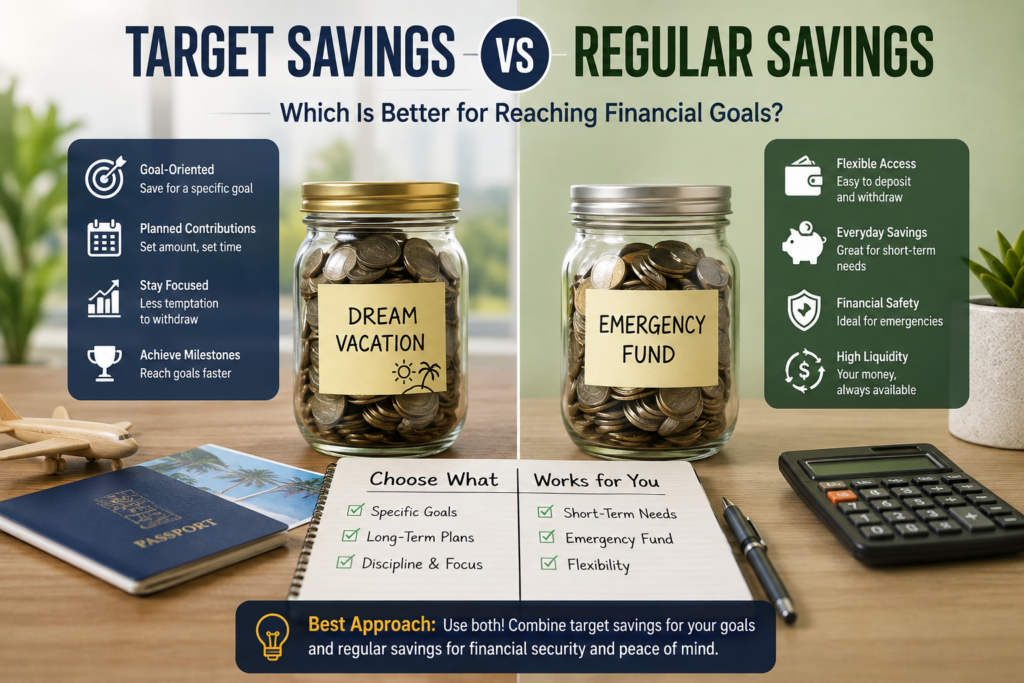
Choose what works for you
Uche Ikebudu
Learn the key differences between target savings and regular savings accounts. Discover which option is best for achieving your financial goals and how to choose the right savings strategy.
Saving money is one of the most important financial habits anyone can develop. Whether you’re planning a dream vacation, buying your first home, paying for higher education, or simply preparing for unexpected expenses, having a savings plan is essential. However, not all savings methods are created equal.
Two of the most common approaches are target savings and regular savings. While both help you set money aside, they serve different purposes and encourage different saving behaviors. Choosing the right one can make a significant difference in how quickly and consistently you achieve your financial goals.
So, which is better? The answer depends on what you’re saving for and how disciplined you are with your money.
What Is Regular Savings?
A regular savings account is the traditional way of saving money. It allows you to deposit funds whenever you choose and withdraw them whenever you need them, depending on the account’s terms and conditions.
This type of account is designed primarily for flexibility. Your money remains accessible, making it ideal for everyday financial needs and emergencies.
Benefits of Regular Savings
Easy access to funds
One of the biggest advantages is liquidity. If an unexpected expense arises, you can withdraw money without waiting for a maturity date or paying penalties.
Flexible deposits
You can save as much or as little as you want. There is no obligation to contribute a fixed amount every month.
Good for emergency funds
Because your money is readily available, regular savings accounts are well suited for emergency savings that may need to be accessed at short notice.
Low risk
Savings accounts are among the safest places to keep your money. Although returns are generally modest, your principal remains secure.
Drawbacks of Regular Savings
The same flexibility that makes regular savings attractive can also become its biggest weakness. Easy access means you’re more likely to withdraw money for non-essential purchases, slowing your progress toward long-term goals.
Additionally, regular savings accounts often offer relatively low interest rates, meaning your money may not grow significantly over time.
- Mutual Funds in Nigeria Explained: A Beginner’s Guide to Growing Wealth
- Stock Market Investing in Nigeria for Beginners: How to Buy Your First Shares
- Target Savings vs Regular Savings: Which Is Better for Reaching Financial Goals?
- Abducted Oyo Pupils, Teachers Rescued After 56 Days in Captivity
- First Batch of Evacuated Nigerians Arrive Home from South Africa Amid Xenophobic Tensions
What Is Target Savings?
Target savings is a goal-oriented approach to saving. Instead of simply putting money aside whenever possible, you save with a specific purpose and timeline in mind.
Many financial institutions now offer target savings accounts that allow customers to set a financial goal, determine how much they want to save, and automate regular contributions until the target is reached.
Examples of target savings goals include:
- Buying a car
- Paying for a wedding
- Saving for a home deposit
- Funding a child’s education
- Starting a business
- Taking a vacation
Unlike regular savings accounts, target savings often restrict withdrawals until you reach your goal or the agreed savings period ends.
Benefits of Target Savings
Encourages Financial Discipline
Target savings helps eliminate impulsive spending. Since the money is less accessible, you’re less tempted to withdraw it for unnecessary expenses.
Clear Financial Goals
Having a defined target gives your savings purpose. Instead of saving “just because,” you’re working toward something tangible, which can be highly motivating.
Automation Makes Saving Easier
Many target savings plans allow automatic transfers from your salary or checking account. This “save first, spend later” strategy reduces the temptation to spend money before saving it.
Higher Potential Returns
Some target savings products offer better interest rates or bonuses for maintaining consistent deposits and completing your savings plan without early withdrawals.
Drawbacks of Target Savings
Despite its benefits, target savings isn’t suitable for every situation.
Limited Access to Your Money
If you need the funds unexpectedly, you may face withdrawal restrictions or lose interest earned.
Less Flexibility
Missing scheduled deposits could affect your progress or reduce the benefits offered by the savings plan.
Not Ideal for Emergencies
Since withdrawals may be restricted, target savings should not replace an emergency fund.
Target Savings vs Regular Savings: A Comparison
| Feature | Target Savings | Regular Savings |
|---|---|---|
| Purpose | Goal-specific | General savings |
| Withdrawals | Limited or restricted | Easy access |
| Flexibility | Lower | High |
| Financial Discipline | Strong | Moderate |
| Best For | Long-term goals | Emergency funds and everyday savings |
| Automation | Usually available | Sometimes available |
| Spending Temptation | Low | Higher |
Which Option Helps You Reach Financial Goals Faster?
For most people, target savings is more effective when working toward a specific financial objective.
Here’s why:
When your savings are separated from your everyday spending account and tied to a defined goal, you’re psychologically less likely to spend the money. Behavioral finance research consistently shows that people are more likely to stay committed when they assign a purpose to their savings.
For example, imagine you’re saving $5,000 for a vacation.
With a regular savings account, you may dip into the money several times for shopping, dining out, or unexpected expenses.
With a target savings account, those withdrawals are restricted, making it easier to stay focused until you reach your goal.
Over time, this discipline leads to greater success.
Can You Use Both?
Absolutely.
In fact, many financial experts recommend combining both savings methods.
A practical strategy might look like this:
- Maintain a regular savings account for emergencies and short-term needs.
- Use one or more target savings accounts for specific financial goals.
For example:
- Emergency fund
- Holiday fund
- Home deposit fund
- Education fund
- New car fund
Separating your savings into different goals also makes it easier to monitor your progress and avoid using money intended for one purpose on something else.
- Mutual Funds in Nigeria Explained: A Beginner’s Guide to Growing Wealth
- Stock Market Investing in Nigeria for Beginners: How to Buy Your First Shares
- Target Savings vs Regular Savings: Which Is Better for Reaching Financial Goals?
- Abducted Oyo Pupils, Teachers Rescued After 56 Days in Captivity
- First Batch of Evacuated Nigerians Arrive Home from South Africa Amid Xenophobic Tensions
Tips for Successful Saving
No matter which savings option you choose, a few habits can dramatically improve your results.
Save Before You Spend
Treat savings like a monthly bill. Set aside money as soon as you receive your income rather than waiting to see what’s left.
Automate Contributions
Automatic transfers remove emotion and inconsistency from the saving process.
Set Realistic Goals
Large financial targets can seem overwhelming. Break them into smaller monthly or weekly milestones to stay motivated.
Review Your Progress
Check your savings regularly. Watching your balance grow reinforces positive financial habits and helps you stay committed.
Increase Savings Over Time
Whenever your income increases, consider directing part of the additional money toward your savings instead of increasing your spending.
- Mutual Funds in Nigeria Explained: A Beginner’s Guide to Growing Wealth
- Stock Market Investing in Nigeria for Beginners: How to Buy Your First Shares
- Target Savings vs Regular Savings: Which Is Better for Reaching Financial Goals?
- Abducted Oyo Pupils, Teachers Rescued After 56 Days in Captivity
- First Batch of Evacuated Nigerians Arrive Home from South Africa Amid Xenophobic Tensions
There is no universal winner in the debate between target savings and regular savings because each serves a different purpose.
If your priority is flexibility and quick access to your money, a regular savings account is the better choice. It’s ideal for building an emergency fund and managing unexpected expenses.
However, if you’re saving for a specific goal and want to improve your financial discipline, target savings offers significant advantages. The structured approach, automated contributions, and reduced temptation to withdraw funds make it easier to stay on track and achieve meaningful financial milestones.
Ultimately, the smartest approach is not choosing one over the other—it’s using both strategically. A regular savings account provides financial security when life is unpredictable, while target savings keeps you focused on your biggest ambitions. Together, they form a balanced savings strategy that can help you build wealth, reduce financial stress, and confidently achieve your short- and long-term financial goals.
- Mutual Funds in Nigeria Explained: A Beginner’s Guide to Growing Wealth
- Stock Market Investing in Nigeria for Beginners: How to Buy Your First Shares
- Target Savings vs Regular Savings: Which Is Better for Reaching Financial Goals?
- Abducted Oyo Pupils, Teachers Rescued After 56 Days in Captivity
- First Batch of Evacuated Nigerians Arrive Home from South Africa Amid Xenophobic Tensions