Discover how mutual funds offer an easy, affordable, and diversified way to invest, even if you’re just starting your wealth-building journey.
Uche Ikebudu
For many Nigerians, investing can seem intimidating. Terms like “stocks,” “bonds,” and “portfolio diversification” often make investing appear to be something reserved for financial experts or wealthy individuals. Fortunately, mutual funds have changed that perception by making investing accessible to everyone.
Whether you’re a young professional saving for the future, a business owner looking to grow idle cash, or someone planning for retirement, mutual funds provide a simple and relatively affordable way to begin your investment journey.
This beginner’s guide explains what mutual funds are, how they work in Nigeria, their benefits and risks, and how you can start building wealth through them.
What Are Mutual Funds?
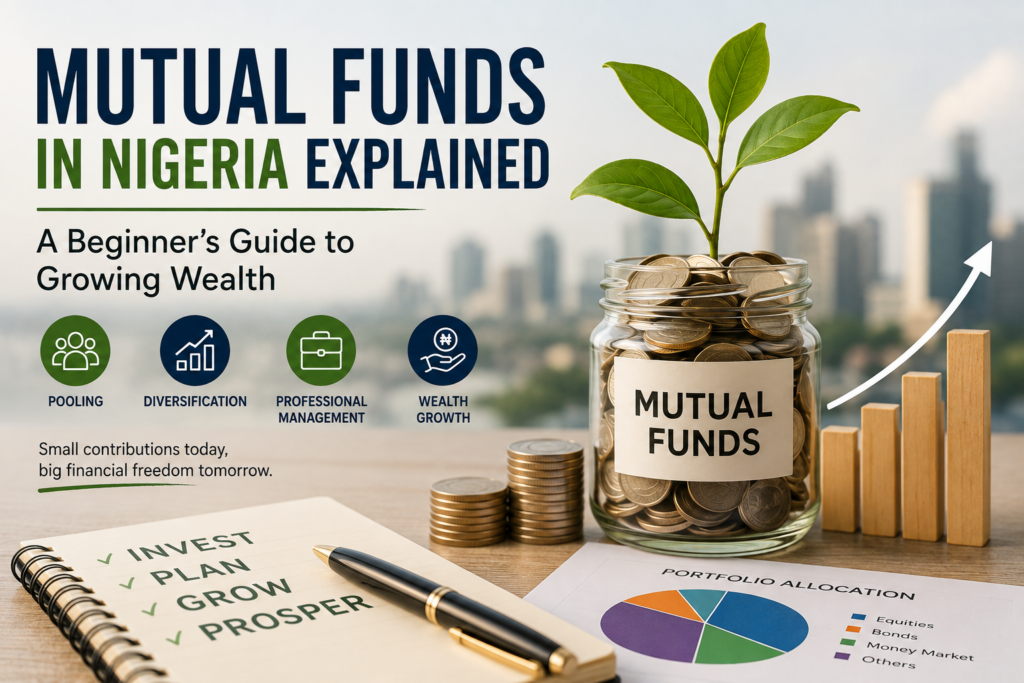
A mutual fund is a professionally managed investment fund that pools money from many investors to purchase a diversified portfolio of assets such as stocks, bonds, treasury bills, money market instruments, or a combination of these investments.
Instead of buying individual investments yourself, you own units in the fund, while experienced fund managers make investment decisions on behalf of all investors.
The value of your investment depends on the performance of the assets held by the fund.
This makes mutual funds an attractive option for beginners who may not have the knowledge or time to manage investments on their own.
How Mutual Funds Work in Nigeria
In Nigeria, mutual funds are managed by licensed fund managers and regulated by the Securities and Exchange Commission (SEC) to protect investors and ensure transparency.
Here’s how the process works:
- Investors contribute money into a mutual fund.
- The fund manager combines the contributions into one investment pool.
- The manager invests the money in various financial assets based on the fund’s objectives.
- Any gains or losses are shared among investors according to the number of units they own.
- Investors can usually buy additional units or redeem their investments based on the fund’s terms.
This pooled investment structure allows individuals with relatively small amounts of money to access professionally managed and diversified portfolios.
Types of Mutual Funds Available in Nigeria
Different mutual funds serve different investment goals and risk appetites.
1. Money Market Funds
Money market funds invest primarily in low-risk instruments such as treasury bills, commercial papers, and fixed deposits.
They are popular among conservative investors because they prioritize capital preservation while generating steady returns.
These funds are suitable for:
- Emergency savings
- Short-term financial goals
- Investors seeking lower risk
2. Equity Funds
Equity funds invest mainly in shares listed on the Nigerian Exchange (NGX).
Because stock prices fluctuate, these funds carry higher risk but also offer greater potential returns over the long term.
They are ideal for investors with a long investment horizon who can tolerate market volatility.
3. Bond Funds
Bond funds invest in government and corporate bonds.
They generally offer moderate risk and more predictable returns than equity funds, making them suitable for investors seeking stable income.
4. Balanced or Mixed Funds
Balanced funds combine stocks, bonds, and money market instruments within one portfolio.
Their goal is to balance growth with stability, making them suitable for investors looking for moderate risk.
Benefits of Investing in Mutual Funds
Professional Fund Management
One of the biggest advantages is that experienced investment professionals manage your money.
Fund managers continuously monitor markets, analyze investment opportunities, and make informed decisions that individual investors may struggle to make on their own.
Diversification
The popular saying, “Don’t put all your eggs in one basket,” perfectly describes diversification.
Instead of investing in a single company or asset, mutual funds spread investments across multiple securities.
This reduces the impact of poor performance from any one investment.
Affordable Entry
Many Nigerian mutual funds allow investors to start with relatively modest amounts, making investing accessible to students, young professionals, and first-time investors.
You don’t need millions of naira to begin building wealth.
Liquidity
Unlike some long-term investments, many mutual funds allow investors to redeem their units within a few business days.
This provides flexibility while still allowing your money to grow.
Transparency
Licensed fund managers regularly publish fund performance, pricing, and portfolio information.
This allows investors to monitor how their investments are performing over time.
- Mutual Funds in Nigeria Explained: A Beginner’s Guide to Growing Wealth
- Stock Market Investing in Nigeria for Beginners: How to Buy Your First Shares
- Target Savings vs Regular Savings: Which Is Better for Reaching Financial Goals?
- Abducted Oyo Pupils, Teachers Rescued After 56 Days in Captivity
- First Batch of Evacuated Nigerians Arrive Home from South Africa Amid Xenophobic Tensions
Risks of Mutual Funds
Although mutual funds are generally considered safer than investing in individual stocks, they are not risk-free.
Market Risk
If the financial markets decline, the value of your mutual fund investment may also fall.
This is particularly true for equity funds.
Inflation Risk
Returns that fail to outpace inflation may reduce the purchasing power of your investment over time.
Interest Rate Risk
Bond funds may experience price fluctuations when interest rates rise or fall.
Management Risk
Although professional managers aim to deliver positive returns, there is no guarantee that every investment decision will be successful.
Past performance does not guarantee future results.
How to Choose the Right Mutual Fund
Before investing, ask yourself a few important questions.
What Is Your Financial Goal?
Are you saving for:
- A home?
- Retirement?
- Your children’s education?
- A business?
- Emergency savings?
Your objective will influence the type of fund that best suits your needs.
How Much Risk Can You Tolerate?
If market fluctuations make you uncomfortable, a money market or bond fund may be more appropriate.
If you’re investing for 10 years or more, an equity fund may offer stronger long-term growth.
What Is Your Investment Timeline?
Short-term goals generally require lower-risk investments.
Long-term goals allow more time to recover from temporary market downturns.
Review Historical Performance
While past returns don’t predict future performance, reviewing a fund’s long-term track record can provide useful insights into consistency and management quality.
Compare Fees
Mutual funds charge management and administrative fees.
These costs vary between providers, so compare them before investing.
Lower fees can have a meaningful impact on long-term returns.
Tips for First-Time Mutual Fund Investors
If you’re just getting started, these practical tips can help you build confidence and improve your chances of success.
Start small. You don’t need a large lump sum to begin investing.
Invest consistently. Regular monthly contributions help build wealth steadily over time.
Think long term. Avoid reacting to short-term market fluctuations.
Reinvest your earnings. Allow dividends and returns to remain invested so your money can benefit from compounding.
Review your portfolio periodically. As your financial goals evolve, your investment strategy should evolve as well.
Common Mistakes to Avoid
Many beginners make avoidable errors that reduce their investment returns.
Some of the most common include:
- Investing without clear financial goals
- Expecting quick profits
- Withdrawing investments too early
- Ignoring fund fees
- Chasing the highest-performing fund without understanding its risks
- Failing to diversify investments
Successful investing requires patience, discipline, and consistency.
Mutual funds have made investing far more accessible for Nigerians who want to grow their wealth without becoming stock market experts. By pooling resources, providing professional management, and offering diversification, mutual funds allow beginners to participate in the financial markets with relatively low barriers to entry.
Whether you’re saving for retirement, building an emergency reserve, funding your children’s education, or working toward financial independence, there’s likely a mutual fund that aligns with your goals and risk tolerance.
The key is to start early, invest consistently, and maintain a long-term perspective. Wealth is rarely built overnight, but with discipline and the power of compounding, mutual funds can become an important part of your financial journey.
As with any investment, take time to research available funds, understand their objectives and risks, and choose licensed fund managers regulated by Nigeria’s Securities and Exchange Commission. By making informed decisions today, you can lay the foundation for greater financial security and long-term wealth tomorrow.
- Mutual Funds in Nigeria Explained: A Beginner’s Guide to Growing Wealth
- Stock Market Investing in Nigeria for Beginners: How to Buy Your First Shares
- Target Savings vs Regular Savings: Which Is Better for Reaching Financial Goals?
- Abducted Oyo Pupils, Teachers Rescued After 56 Days in Captivity
- First Batch of Evacuated Nigerians Arrive Home from South Africa Amid Xenophobic Tensions
[…] Nigeria’s Inflation Trends: 2024 through mid-2025 […]