A beginner-friendly guide to investing on the Nigerian Exchange (NGX) and building wealth through smart, long-term stock investing.
By Uche Ikebudu
- Mutual Funds in Nigeria Explained: A Beginner’s Guide to Growing Wealth
- Stock Market Investing in Nigeria for Beginners: How to Buy Your First Shares
- Target Savings vs Regular Savings: Which Is Better for Reaching Financial Goals?
- Abducted Oyo Pupils, Teachers Rescued After 56 Days in Captivity
- First Batch of Evacuated Nigerians Arrive Home from South Africa Amid Xenophobic Tensions
For many Nigerians, investing in the stock market seems complicated or reserved for financial experts. The thought of buying shares, understanding stock prices, and following market trends can be intimidating, especially for first-time investors. However, the truth is that anyone can invest in the Nigerian stock market with the right knowledge and a disciplined approach.
The Nigerian Exchange (NGX) has created wealth for countless investors over the years through capital appreciation and dividend payments. While stock prices fluctuate, long-term investors who make informed decisions often benefit from the growth of strong companies and the power of compounding.
If you’ve been wondering how to buy your first shares, this guide will walk you through everything you need to know.
What Is the Stock Market?
A stock market is a marketplace where investors buy and sell ownership stakes, known as shares, in publicly listed companies.
When you purchase shares in a company, you become a shareholder. Depending on the number of shares you own, you are entitled to a portion of the company’s profits, usually paid as dividends, and you may also benefit if the share price increases over time.
In Nigeria, shares are traded on the Nigerian Exchange (NGX), formerly known as the Nigerian Stock Exchange (NSE).
The NGX lists companies from various sectors, including banking, telecommunications, consumer goods, industrials, agriculture, healthcare, and energy.
Why Invest in Nigerian Stocks?
Investing in shares can be one of the most effective ways to build long-term wealth.
Capital Appreciation
If the company performs well, its share price may increase over time. This means you can sell your shares later for more than you originally paid.
Dividend Income
Many companies listed on the NGX reward shareholders by paying annual or interim dividends.
Dividend-paying companies can provide investors with a steady source of passive income.
Ownership in Leading Companies
Buying shares allows you to own part of some of Nigeria’s largest and most successful businesses.
Protection Against Inflation
Although stocks carry risks, they generally have greater long-term growth potential than leaving money in a regular savings account, helping investors preserve purchasing power over time.
- Mutual Funds in Nigeria Explained: A Beginner’s Guide to Growing Wealth
- Stock Market Investing in Nigeria for Beginners: How to Buy Your First Shares
- Target Savings vs Regular Savings: Which Is Better for Reaching Financial Goals?
- Abducted Oyo Pupils, Teachers Rescued After 56 Days in Captivity
- First Batch of Evacuated Nigerians Arrive Home from South Africa Amid Xenophobic Tensions
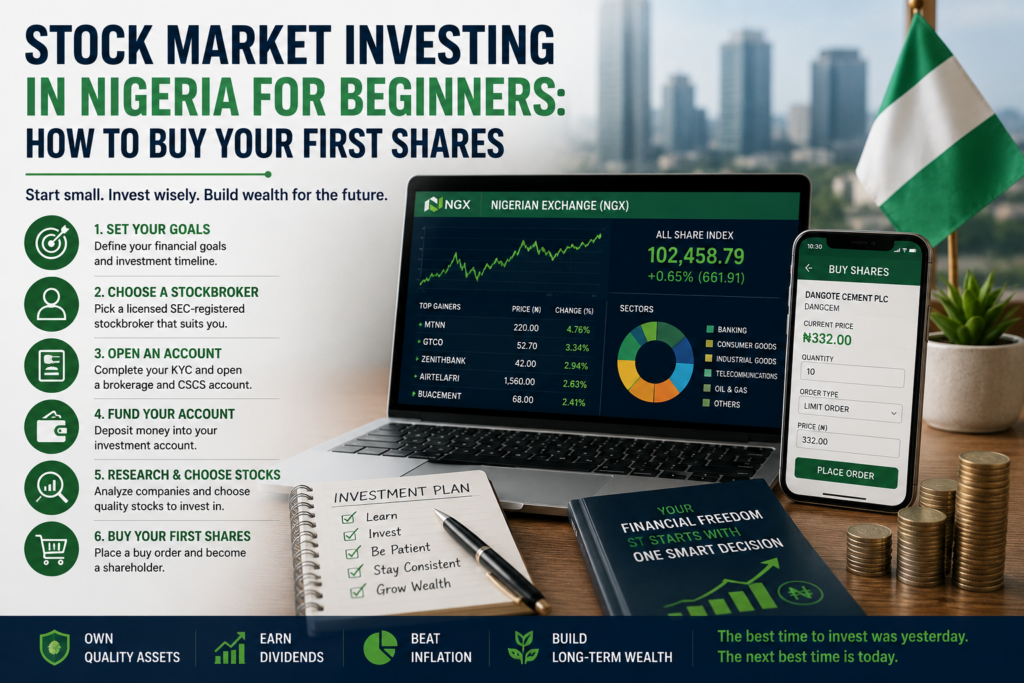
Step 1: Set Your Investment Goals
Before buying your first shares, ask yourself why you’re investing.
Are you saving for:
- Retirement?
- Buying a home?
- Your children’s education?
- Financial independence?
- Long-term wealth creation?
Having a clear goal helps determine how much risk you’re willing to take and how long you plan to stay invested.
For most beginners, stock investing should be viewed as a long-term commitment rather than a way to make quick money.
Step 2: Choose a Licensed Stockbroker
You cannot buy shares directly from the Nigerian Exchange.
Instead, you must use a licensed stockbroker registered with the Securities and Exchange Commission (SEC) and the Nigerian Exchange.
Your broker acts as the intermediary between you and the stock market.
Many brokerage firms now offer digital platforms that allow investors to:
- Open investment accounts online
- Buy and sell shares
- Track portfolio performance
- View market prices
- Receive investment reports
When selecting a broker, compare:
- Transaction fees
- Ease of using the platform
- Customer service
- Research tools
- Reputation
Step 3: Open a Brokerage Account
After selecting a broker, you’ll need to complete your account registration.
Most brokers require:
- A valid means of identification
- Passport photograph
- Bank Verification Number (BVN)
- Proof of address
- Bank account details
You will also receive a Central Securities Clearing System (CSCS) account.
The CSCS functions like a secure electronic vault where your shares are stored after purchase.
Instead of receiving paper share certificates, your investments are recorded electronically in your CSCS account.
Step 4: Fund Your Investment Account
Once your account is approved, transfer money into your brokerage account.
You don’t need millions of naira to begin investing.
Many brokers allow beginners to start with relatively modest amounts, making stock investing accessible to young professionals and first-time investors.
The important thing is to start with money you won’t need for immediate expenses.
Step 5: Research Companies Before Buying
One of the biggest mistakes beginners make is buying shares simply because someone recommended them.
Instead, invest in companies you understand.
Consider factors such as:
- Revenue growth
- Profitability
- Dividend history
- Debt levels
- Industry position
- Corporate governance
- Future growth prospects
Companies with strong fundamentals are generally better suited for long-term investors.
Reading annual reports and following financial news can also improve your investment decisions.
Step 6: Place Your First Buy Order
Once you’ve selected a company, your broker will help you place an order.
You’ll specify:
- The company
- Number of shares
- Purchase price (or market price)
If your order matches a seller’s price, the transaction is completed, and the shares appear in your CSCS account after settlement.
Congratulations—you are officially a shareholder.
- Mutual Funds in Nigeria Explained: A Beginner’s Guide to Growing Wealth
- Stock Market Investing in Nigeria for Beginners: How to Buy Your First Shares
- Target Savings vs Regular Savings: Which Is Better for Reaching Financial Goals?
- Abducted Oyo Pupils, Teachers Rescued After 56 Days in Captivity
- First Batch of Evacuated Nigerians Arrive Home from South Africa Amid Xenophobic Tensions
Diversify Your Investments
A common investing rule is:
Don’t put all your eggs in one basket.
Instead of investing all your money in one company, spread your investments across different industries.
For example:
- Banking
- Consumer goods
- Telecommunications
- Agriculture
- Energy
- Industrial companies
Diversification reduces the impact if one company performs poorly.
Understand the Risks
Although stocks can generate attractive returns, they also involve risk.
Market Risk
Share prices rise and fall based on economic conditions, company performance, and investor sentiment.
Company Risk
Poor management decisions or declining profits can reduce a company’s share price.
Liquidity Risk
Some stocks may take longer to sell if there are few buyers in the market.
Emotional Investing
Many beginners panic when prices fall and sell too quickly.
Successful investors understand that temporary market declines are part of investing.
Common Mistakes Beginners Should Avoid
Trying to Get Rich Quickly
Stock investing is a marathon, not a sprint.
Avoid chasing unrealistic returns or “hot tips.”
Investing Without Research
Never buy shares simply because everyone else is buying them.
Always understand the company you’re investing in.
Ignoring Diversification
Putting all your money into one stock increases your risk unnecessarily.
Checking Prices Every Day
Daily price movements are normal.
Long-term investors focus on business performance rather than short-term market fluctuations.
Investing Emergency Funds
Only invest money you can leave untouched for several years.
Your emergency savings should remain separate.
Tips for Long-Term Success
Building wealth through the stock market requires patience and discipline.
Successful investors often follow these habits:
- Invest consistently rather than waiting for the “perfect” time.
- Reinvest dividends to accelerate wealth creation.
- Continue learning about investing and financial markets.
- Review your portfolio periodically.
- Stay invested during market volatility instead of reacting emotionally.
Over time, these habits can significantly improve your investment outcomes.
Investing in the Nigerian stock market is no longer reserved for wealthy individuals or financial professionals. With the rise of digital brokerage platforms, improved investor education, and easier access to the Nigerian Exchange, buying your first shares has become simpler than ever.
The journey begins by setting clear financial goals, choosing a licensed stockbroker, opening a brokerage and CSCS account, researching companies carefully, and investing consistently. While stock prices may fluctuate in the short term, history has shown that disciplined, long-term investors are often rewarded through capital appreciation and dividend income.
Remember that successful investing isn’t about finding the next “hot stock.” It’s about owning quality businesses, diversifying your investments, managing risk wisely, and allowing time to work in your favor. By starting early and remaining committed to your investment plan, you can gradually build a portfolio that supports your financial goals and creates lasting wealth.
- Mutual Funds in Nigeria Explained: A Beginner’s Guide to Growing Wealth
- Stock Market Investing in Nigeria for Beginners: How to Buy Your First Shares
- Target Savings vs Regular Savings: Which Is Better for Reaching Financial Goals?
- Abducted Oyo Pupils, Teachers Rescued After 56 Days in Captivity
- First Batch of Evacuated Nigerians Arrive Home from South Africa Amid Xenophobic Tensions